

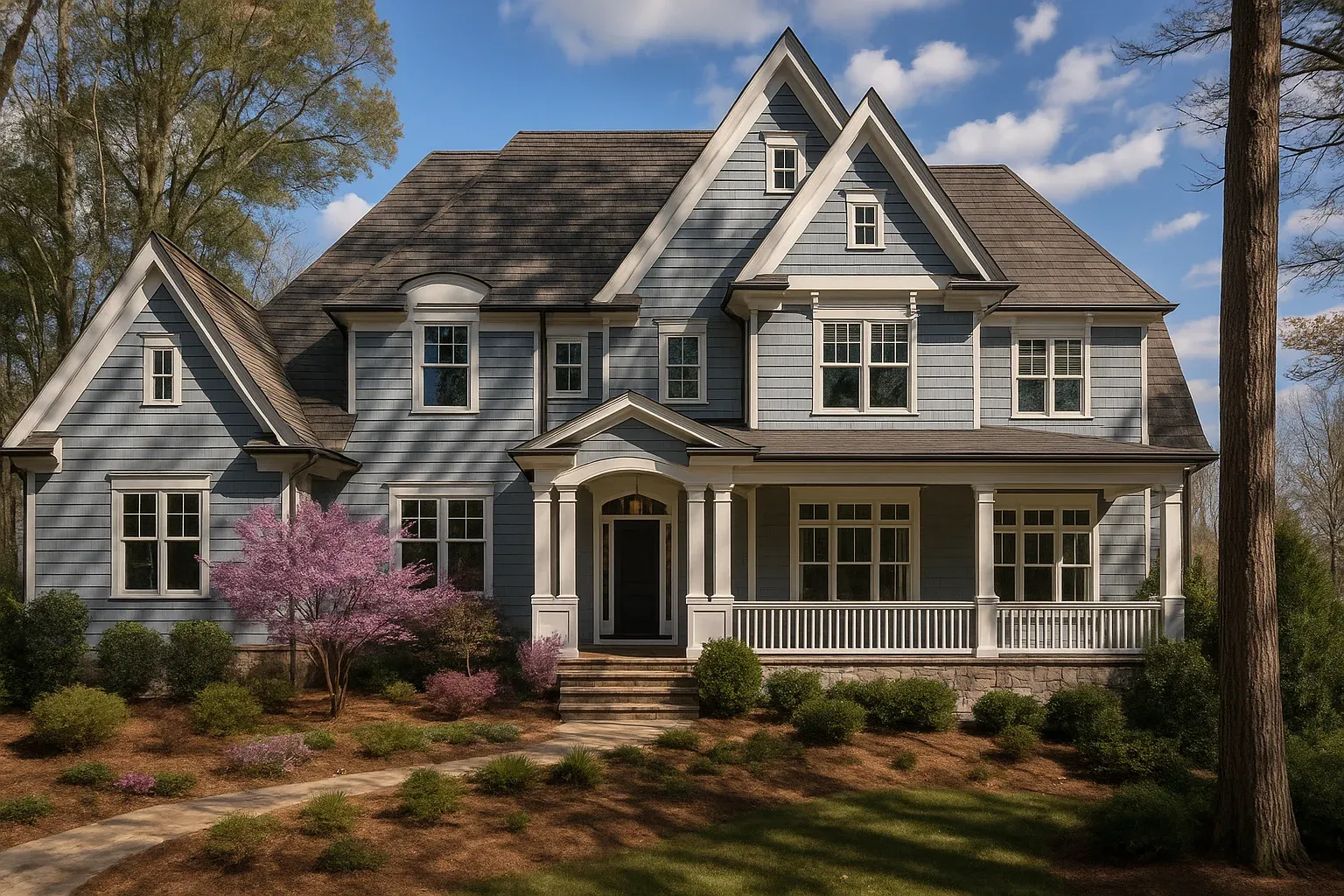

5 Must-Have Features in Modern Family Homes (and the Floor Plans That Include Them)
Families don’t live in museums. They live in drop zones, between soccer practice and Zoom calls. These five features earn their keep every day—and the floor plans that include them tend to hold value long after the paint dries. Use the good-better-best checklists to fine-tune your must-haves.
1) Open-Concept Kitchen & Great Room Smart Zoning
Open concept means connected spaces with just enough definition to manage noise and clutter. Zone the island as command center, dining as a flexible node, and the great room with a fireplace or media wall.
Good-Better-Best
- Good: 9–10 ft ceilings; 4-seat island; dining within a few steps.
- Better: Walk-in pantry; window over sink; covered rear patio alignment.
- Best: Scullery/pantry kitchen; pocket office nearby; stacking doors to outdoor room.
Plans to Explore: Open Concept House Plans • Modern Farmhouse with Scullery
2) Mudroom with Drop Zone
A great mudroom is the difference between weekend chaos and weekday calm. Size it for your gear, not a catalog photo.
Good-Better-Best
- Good: Bench + hooks + shoe tray; direct line from garage to kitchen.
- Better: Individual lockers; coat closet; tile or sealed concrete floor.
- Best: Pet station, charging drawers, and a pocket door to hide the mess.
Plans to Explore: Mudroom-Friendly Plans • Plans with Pet Spaces
3) A True Flex Room (Office / Guest / Play / Gym)
The most valuable square footage is the kind that does double duty. A flex room off the foyer can morph from office to guest room with a simple furniture swap. Add a nearby full bath for instant versatility.
Good-Better-Best
- Good: 10×11 room with a solid door and data drop.
- Better: Closet for guest use; acoustic treatment; bath access.
- Best: Convertible built-ins (murphy bed or wall desk); separate HVAC zone.
Plans to Explore: Home Office Floor Plans • Guest-Ready Plans
4) Separated Primary Suite Retreat
Privacy is a feature. Separate the primary suite from other bedrooms. Use a small vestibule or angle the entry so sightlines don’t hit the bed.
Good-Better-Best
- Good: Split-bedroom ranch or upstairs/downstairs separation.
- Better: Direct laundry access from the primary closet.
- Best: Private patio or balcony; spa-style shower and soaking tub.
Plans to Explore: Split-Bedroom Plans • Primary-on-Main Plans
5) Indoor-Outdoor Living That Really Works
Covered outdoor rooms extend living space—but only if they’re big enough and aligned with the kitchen/great room. Aim for 12–14 ft depth and shelter from prevailing weather.
Good-Better-Best
- Good: 12-ft-deep covered patio aligned with dining.
- Better: Outdoor fireplace or heaters; easy grilling access.
- Best: Stacking doors; ceiling fans; screens for shoulder seasons.
Plans to Explore: Indoor-Outdoor House Plans • Plans with Covered Rear Porches
Common Layout Mistakes to Avoid
- An island too far: keep the work triangle compact even in big kitchens.
- A mudroom with no power: add outlets and USB inside lockers.
- Flex rooms trapped behind bedrooms: keep them public-facing for daytime use.
- Outdoor rooms too shallow: 12–14 ft supports table + chairs comfortably.
Frequently Asked Questions
Will open concept hurt acoustics?
Not if you plan zones, soft finishes, and partial separations like cased openings or half walls.
Is a scullery overkill?
If you entertain or meal prep, a scullery keeps the main kitchen pretty and productive.
What’s the minimum mudroom size?
Aim for at least 6×8 ft with one wall of storage; more if you have pets or sports gear.
Build Your Feature Shortlist
- Open Concept Plans
- Mudroom-Friendly Plans
- Split-Bedroom Plans
- Indoor-Outdoor Plans
Sizing Guide: Rooms That Furnish Easily
- Great room (sofa + 2 chairs + media): 14×18 ft minimum.
- Dining (table for 6–8): 12×14 ft with a walkway behind chairs.
- Kitchen island seating: 24 in per stool, 15 in overhang depth.
- Mudroom locker width: 18–24 in per person.
- Outdoor room: 12–14 ft deep by 16–20 ft wide.
Pro Tips & Builder Insights
- Plan the path: Walk the plan in order—arrival → drop zone → kitchen → laundry → bedrooms.
- Measure, don’t guess: Confirm furniture clearances with actual dimensions.
- Light first: Daylight beats wattage; add task lighting where hands work—sinks, islands, desks.
- Privacy: Angle openings so bedrooms and baths don’t look into each other; short vestibules beat long halls.
- Storage math: One wall per level for storage with a plan.
- Budget guardrails: Keep a 10–15% contingency until framing is inspected.
- Workflow: Decide appliance specs early so cabinetry, electrical, and ventilation fall in line.
- Resale: Flexible rooms and durable outdoor spaces hold value as finishes age.
- Region matters: Match cladding and roof to local climate for durability and simpler warranties.
Friendly reminder: Work backward from your day—trace one weekday and one weekend. Place storage, power, and seating where you actually pause. The best plans make daily patterns effortless.
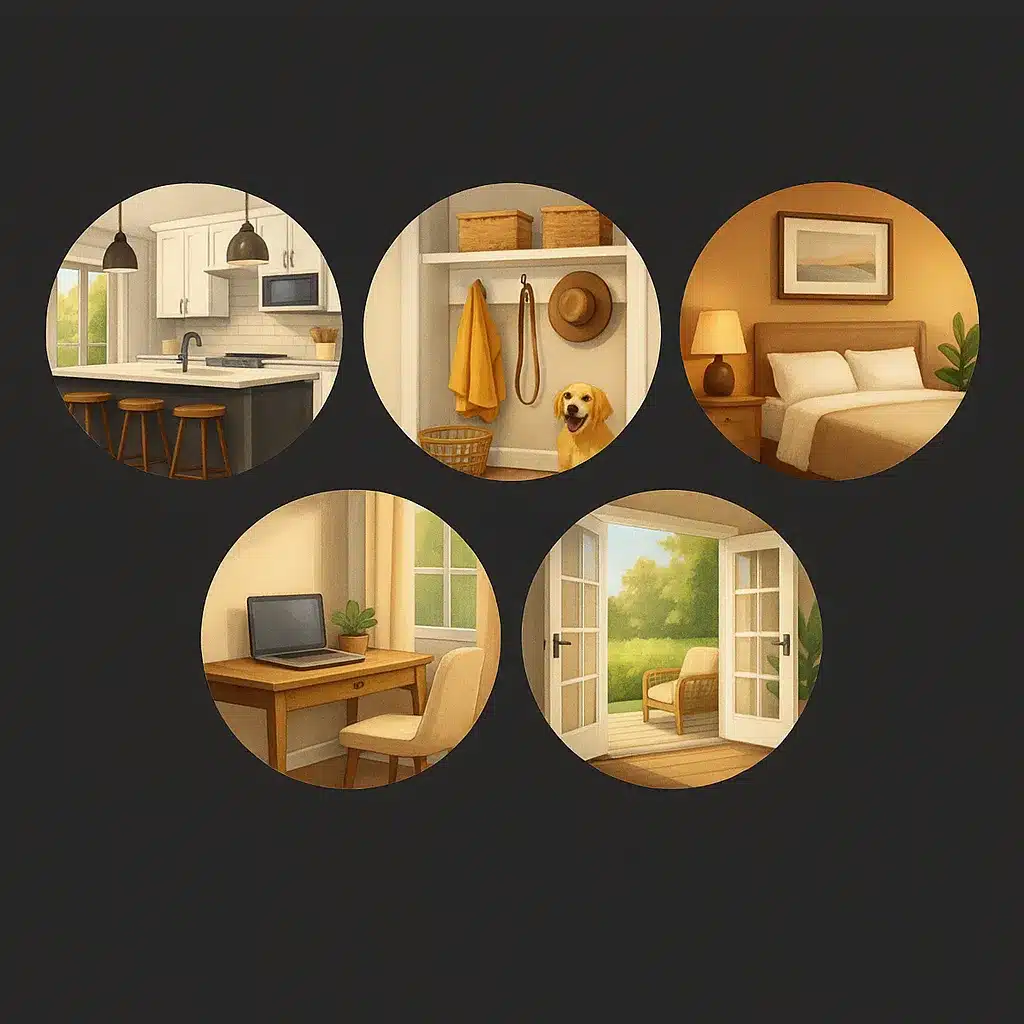
Quick Planner: Pick Your Top 5
Circle what matters most today—then match a plan collection.
- Open kitchen + great room (zoned) → Open Concept Plans
- Mudroom + drop zone + pet station → Mudroom-Friendly
- True flex room (office/guest) → Guest-Ready / Home Office
- Separated primary suite → Split-Bedroom
- Indoor–outdoor living → Indoor-Outdoor
At-a-Glance Sizing
Use these as friendly minimums before you fall in love with a plan.
| Space | Works Well At | Why It Matters |
|---|---|---|
| Great room | 14×18 ft | Seats sofa + 2 chairs + media with clear paths |
| Dining | 12×14 ft | Room for 6–8 plus walkway behind chairs |
| Island seating | 24 in per stool • 15 in overhang | Comfort for elbows, plates, and knees |
| Mudroom lockers | 18–24 in per person | Coats, backpacks, and charging without clutter |
| Outdoor room | 12–14 ft deep × 16–20 ft wide | Furnishes for dining + lounge, not just a perch |
Good
9–10 ft ceilings • 4-seat island • simple split bedrooms • 12-ft covered patio
Better
Walk-in pantry • lockers • closet in flex • laundry from primary
Best
Scullery • pocket office • stacking doors • private patio/balcony • separate HVAC for flex
Ready to Shortlist Plans?
Tell us your lot’s width, depth, slope, and any “must-fit” furniture. We’ll match 3–5 plans that hit your Top 5 features.
Related Collections
- Primary-on-Main House Plans
- Covered Rear Porch Plans
- Modern Farmhouse Plans with Scullery
Friendly reminder: Walk the plan like a normal day—arrival → drop zone → kitchen → laundry → bedrooms. If it flows on paper, it’ll flow in life.
Builder Insights That Save Real Money
Decor choices rarely break budgets—but roof shapes, window counts, and structural spans can. Simplify first, then layer personality. A clean roofline, right-sized windows, and fewer framing breaks free up cash for features you’ll actually enjoy daily.
- Roof complexity adds cost faster than most finishes.
- Window strategy—group openings for balanced light, not scattered ones.
- Span length drives beam and foundation costs—keep it reasonable.
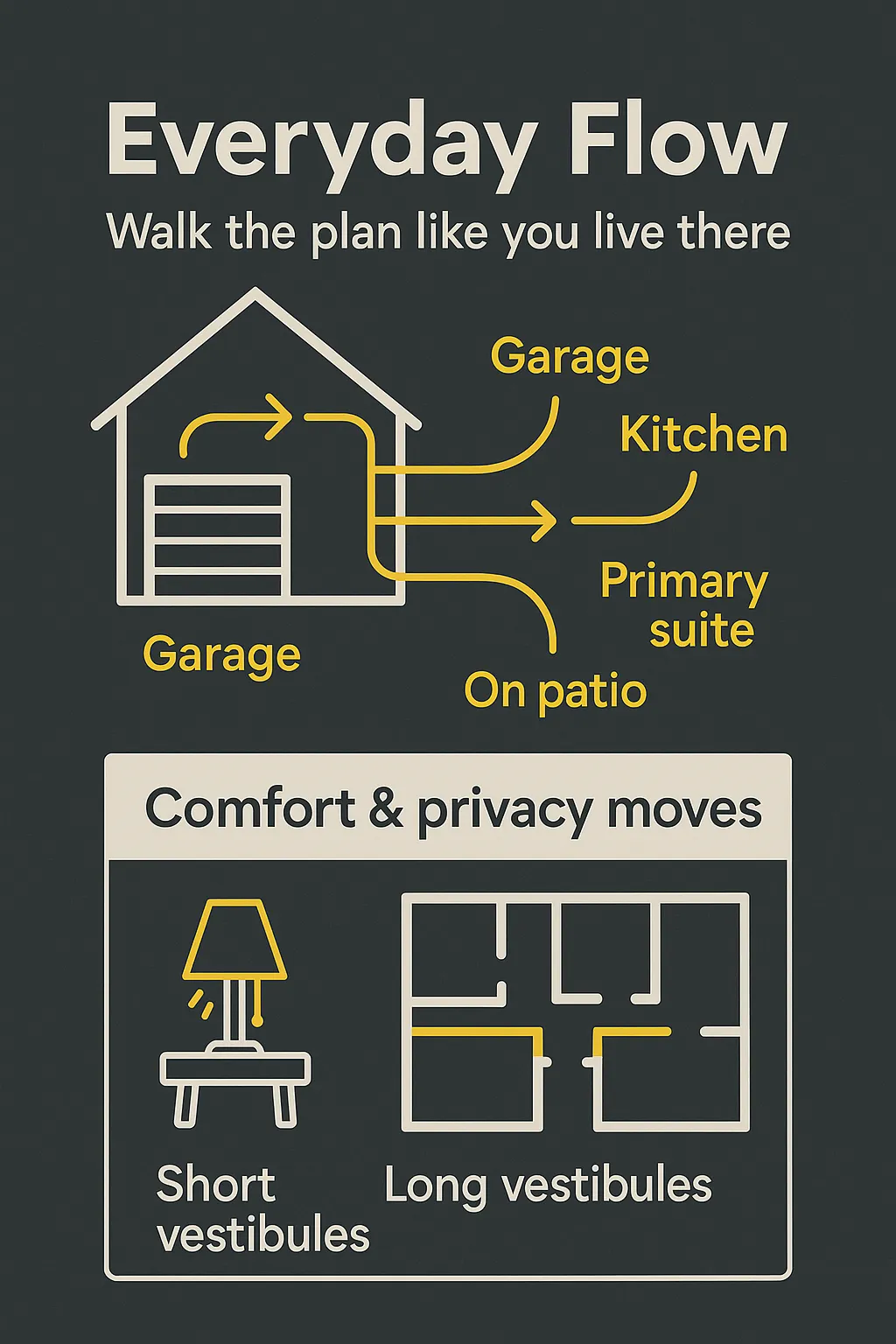
Everyday Flow: Walk the Plan Like You Live There
Great plans aren’t about square footage—they’re about how your day moves. Use this quick test before you fall in love with a layout.
- Start at the garage or porch—where do coats, shoes, and bags go?
- Walk to the kitchen—is it near groceries and laundry?
- Move to the primary suite—do you pass the family zone or keep it private?
- End on the patio—is it truly connected, or does it feel tacked on?
Friendly tip: if you can trace your weekday routine without backtracking, the plan works.
Smart Comfort & Privacy Moves
- Light beats wattage: add taller windows or a transom before extra lamps.
- Acoustic balance: soft surfaces + solid doors in flex and media zones.
- Short vestibules: better than long halls for sound control and privacy.
- Task lighting: add where hands work—sinks, desks, and kitchen islands.
Budget Guardrail: The 15% Rule
Hold back 10–15% of your total build budget until framing passes inspection. Spending it early on upgrades is the #1 reason for overruns. The smartest builders call it the “sleep-at-night fund.”
Next up: compare Open Concept, Mudroom, and Split-Bedroom collections to see which fits your daily flow best.
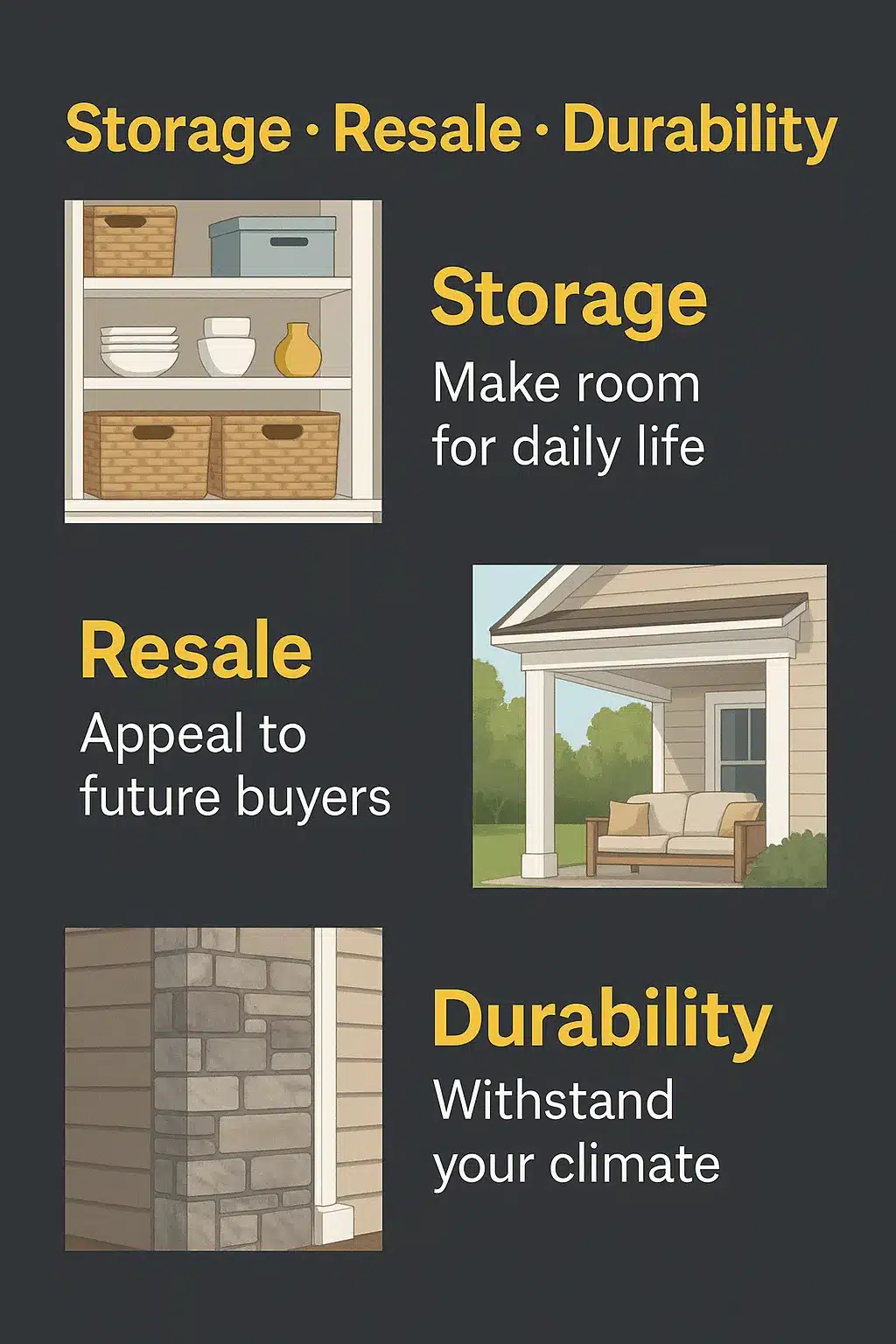
Storage Math: Space That Works Every Day
Every family collects gear. Plan for it on purpose. Devote one wall per level to organized storage—pantry shelving, linen towers, or garage systems. Thoughtful storage is the unsung hero of low-stress homes.
- Kitchen: combine open shelves + closed cabinetry for quick access and calm visuals.
- Entry & mudroom: hooks, baskets, and charging drawers near daily traffic.
- Laundry zone: overhead cabinets + pull-out hamper systems.
- Garage: tall shelves, labeled bins, and a “one wall” gear rule.
Resale Value: Design for Tomorrow
Flexible rooms and outdoor spaces with purpose tend to hold value even as finishes age. Buyers respond to livability over luxury—smart flow, usable storage, and low-maintenance materials.
- Flexibility sells: office today, nursery or studio tomorrow.
- Outdoor rooms last: covered porches and patios extend usable square footage.
- Durable bones: a simple roofline, efficient HVAC, and well-placed plumbing stack outlast trends.
Region & Durability
Match your exterior materials to climate for fewer callbacks and faster schedules. Local, proven materials simplify warranty talks and make your build team’s life easier.
- Hot regions: light roof colors + shaded glazing reduce HVAC load.
- Cold climates: deeper eaves, insulated basements, triple-pane windows.
- Coastal builds: corrosion-resistant fasteners and wind-rated doors.
- All regions: choose low-maintenance siding like fiber cement or brick.
Your Next Step
Compare your Top 5 features against real plans. Save what fits your lot—and your life—then share with your builder for early feedback.
Bringing It All Together
The best modern family homes don’t chase trends—they refine daily comfort.
Whether it’s a well-placed mudroom, a flex room that adapts, or outdoor space that invites real use, each feature adds lasting value.
Start with layout clarity, layer in livability, and finish with details that feel like home from day one.
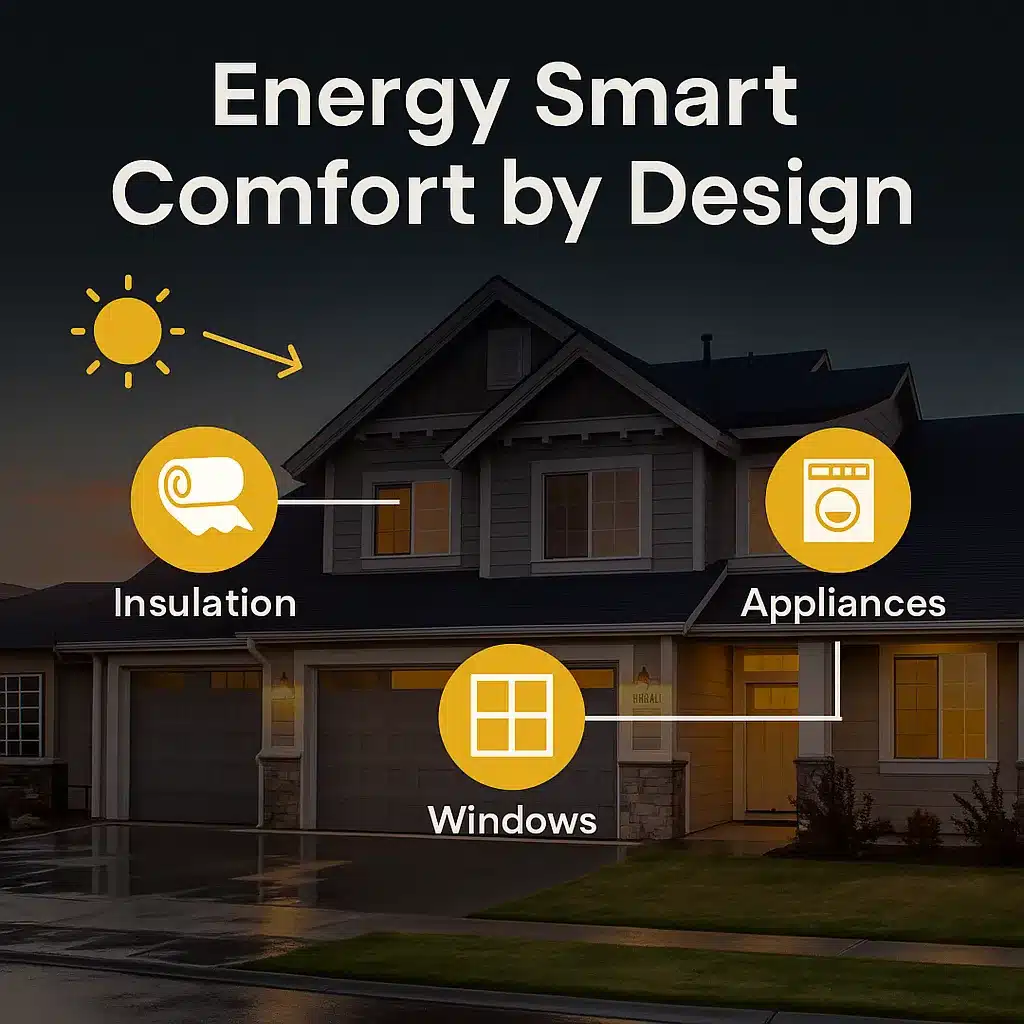
Energy-Smart Design Choices
Lowering bills doesn’t mean adding gadgets—it’s about passive efficiency.
Position main windows for daylight, shade glass where it overheats, and specify well-insulated walls and roofs. These quiet design moves create a cooler, calmer, longer-lasting home.
- Orientation: Use solar-friendly layouts—morning light in kitchens, afternoon shade in living areas.
- Insulation: Upgrade walls and attic first; visible upgrades can come later.
- Windows: Choose low-E glass and cross ventilation over extra fixtures.
- Appliances: Select Energy Star where possible—it pays itself back fast.
Find Your Family-Ready Plan
Explore hundreds of build-ready layouts designed for today’s families—each tested for flow, comfort, and efficiency.
Filter by lot size, room count, or must-have feature to find your perfect match.
Browse Family Plans
Talk with a Designer
Written by the House Plan Experts — helping families design smarter, not bigger.
More Design Guides →
Design Smarter, Not Bigger
Square footage doesn’t guarantee comfort—good flow does.
The homes that live best are the ones that let your family move, store, and gather without bumping into each other or your budget.
Every feature in this guide—open kitchens, flex rooms, drop zones, and daylight-friendly layouts—was chosen to make daily life easier, not just prettier.
Your Quick Build-Ready Checklist
- ✅ Choose a plan that fits your lot shape and setbacks.
- ✅ Confirm room furniture clearances before finalizing.
- ✅ Verify light + vent orientation for comfort year-round.
- ✅ Keep your 10–15% contingency safe until framing inspection.
- ✅ Review every traffic path—from arrival to patio—for flow and logic.
Ready to Find Your Plan?
Explore modern, family-tested layouts that balance flow, storage, and long-term comfort.
Every plan includes real build data and customization options from trusted designers.
View Modern Family Plans
Ask a Plan Expert
🏡 Pro Tip: A well-zoned 2,000 sq ft plan often feels larger—and costs less to live in—than a 2,400 sq ft maze.
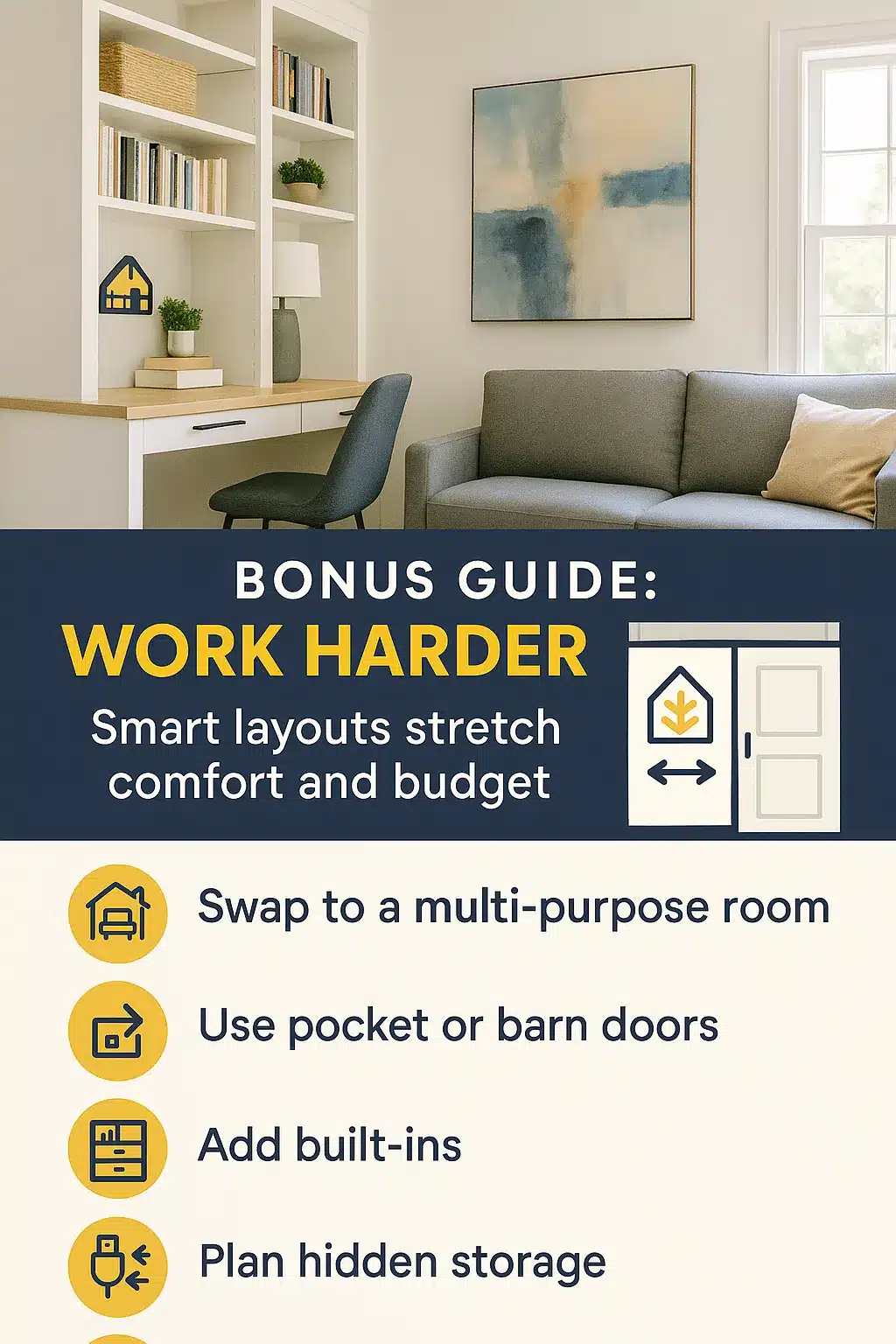
Bonus Guide: Space That Works Harder
Before adding square footage, look for ways to make the rooms you already have work harder.
Smart layouts stretch both comfort and budget—no extra foundation required.
- 💡 Swap unused formal spaces for a multi-purpose room that fits your lifestyle.
- 💡 Use pocket or barn doors to recover clear floor space in tight areas.
- 💡 Add built-ins instead of furniture—it's less clutter, more function.
- 💡 Plan for hidden charging drawers and storage walls early in design.
- 💡 Align windows and doors for cross-ventilation and natural light.
Smart Plan Pick
Explore Efficient Small House Plans—modern layouts under 2,000 sq ft that live large through clever circulation and built-in storage.
🏠 Efficiency is elegance—and it shows up every day in how your home feels, not just how it looks.
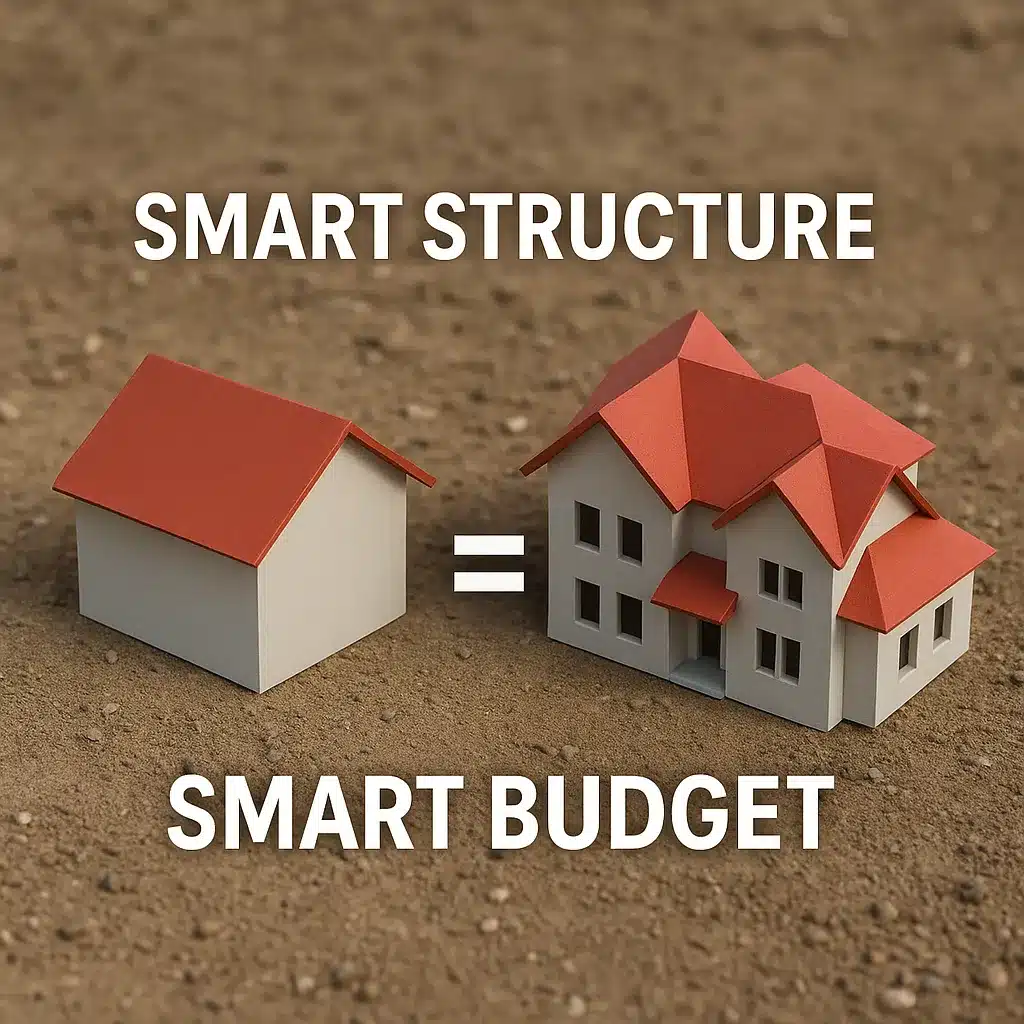
Builder Insight: Form Follows Function
Even seasoned pros will tell you—simple shapes build faster and cost less.
A thoughtful footprint and smart structure do more for your timeline and budget than trendy finishes ever could.
- 🧱 Limit exterior jogs and roof angles—each adds framing and flashing cost.
- 📏 Align plumbing walls vertically to reduce material waste and simplify installation.
- 🌞 Group windows where they matter most: light where people gather, not just for symmetry.
- 🔧 Confirm HVAC routes before adding beams or vaulted ceilings.
- 💰 Keep finish choices simple until after framing inspection—structure first, style second.
When in doubt, ask your builder:
“What’s the simplest way to achieve this look without extra framing?”
The answer usually saves both time and money.
🔨 Smart structure supports beautiful design—and fewer surprises in the field.
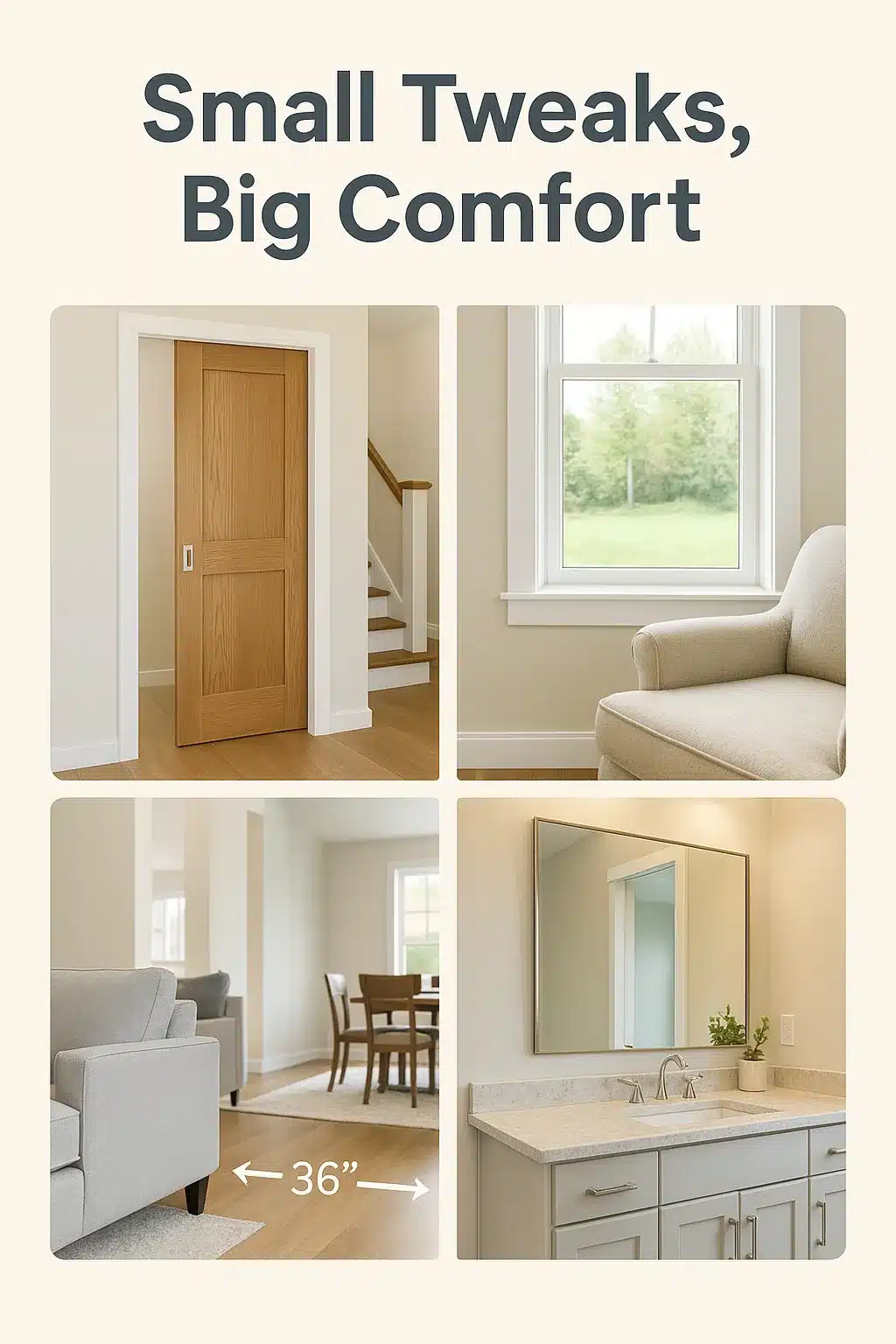
Design Detail: Small Tweaks, Big Comfort
A few inches here and there make the difference between “tight fit” and “perfect flow.”
Micro-adjustments—door swings, window heights, and furniture clearances—shape how your home feels every day.
- 🚪 Use pocket doors in mudrooms, pantries, and ensuite baths to free up space.
- 🪟 Drop window sills to 24–30″ for better daylight and furniture flexibility.
- 📏 Keep at least 36″ between furniture edges for natural walkways.
- 🪞 Align mirrors with natural light sources to brighten smaller rooms.
- 📐 Extend base cabinets 3–4″ in depth for extra counter reach—small upgrade, big payoff.
Details don’t cost much—but they feel expensive when done right.
Plan for them before drywall and celebrate them every day after move-in.
✨ Good design hides itself—you just feel that it works.
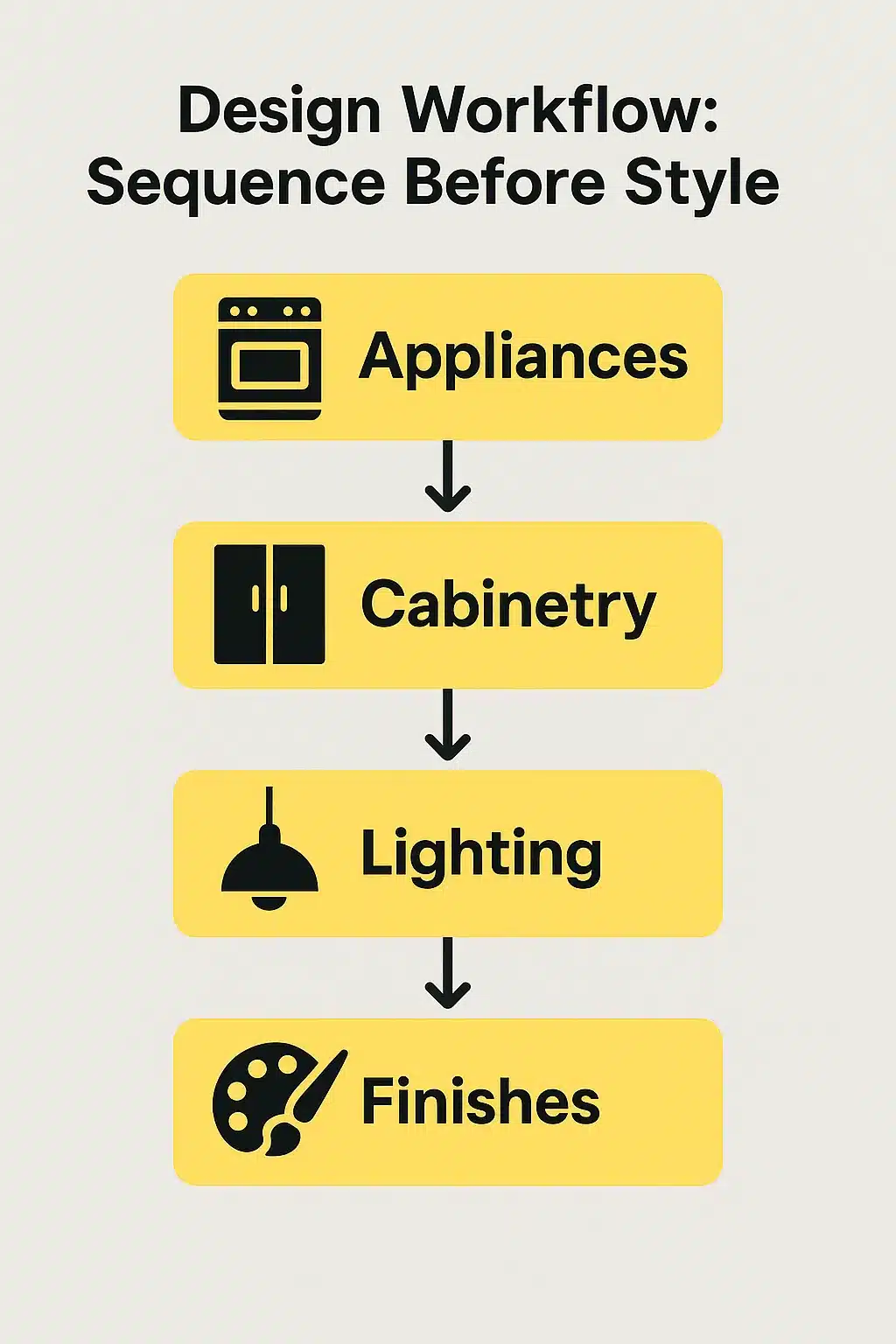
Design Workflow: Sequence Before Style
A beautiful home begins with the right order of decisions.
Think of design as a domino line—each choice sets up the next.
Get the sequence right, and the build moves smoother, faster, and cheaper.
- 🧰 Finalize appliance list early—cabinetry, outlets, and ventilation follow that lead.
- 💡 Confirm window types and swing directions before finalizing electrical layouts.
- 🚪 Lock in door sizes and ceiling heights before trim or lighting selections.
- 📋 Share updates with your builder digitally—version control saves confusion.
- 🧾 Keep one shared “decision sheet” for fixtures, finishes, and budget notes.
When in doubt, ask:
“Does this decision affect something hidden behind the wall?”
If yes, handle it early. That’s how pros think ahead.
⚙️ Smart sequencing prevents rework—and protects your budget from domino effects gone wrong.
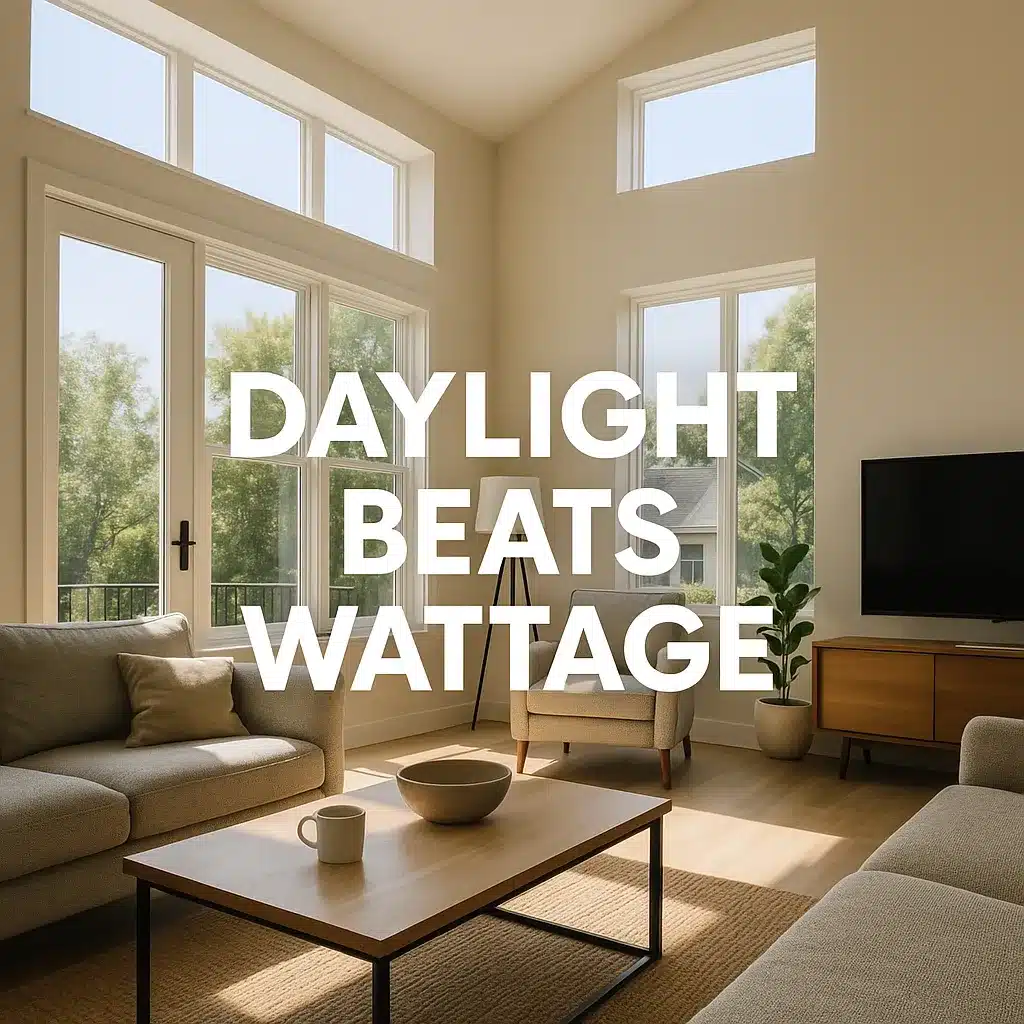
Design for Comfort & Light
Lighting makes or breaks how a home feels.
You can’t fix bad daylight with bulbs—so plan window placement, ceiling height, and shade early.
Balance natural and task lighting for bright days and calm nights.
- 🌞 Orient main living areas toward the sun for natural warmth and cheer.
- 🪟 Add windows on at least two sides of gathering spaces for balanced light.
- 💡 Combine ceiling lighting with sconces and under-cabinet strips for flexible moods.
- 🌤️ Use transoms or clerestory windows to bring in daylight without sacrificing privacy.
- 🌙 Dimmer switches = instant comfort control and lower energy use.
Tip: prioritize daylight before decor.
Paint, flooring, and furniture all look better under natural light than artificial glare.
💡 Daylight beats wattage—and your eyes will thank you every morning.
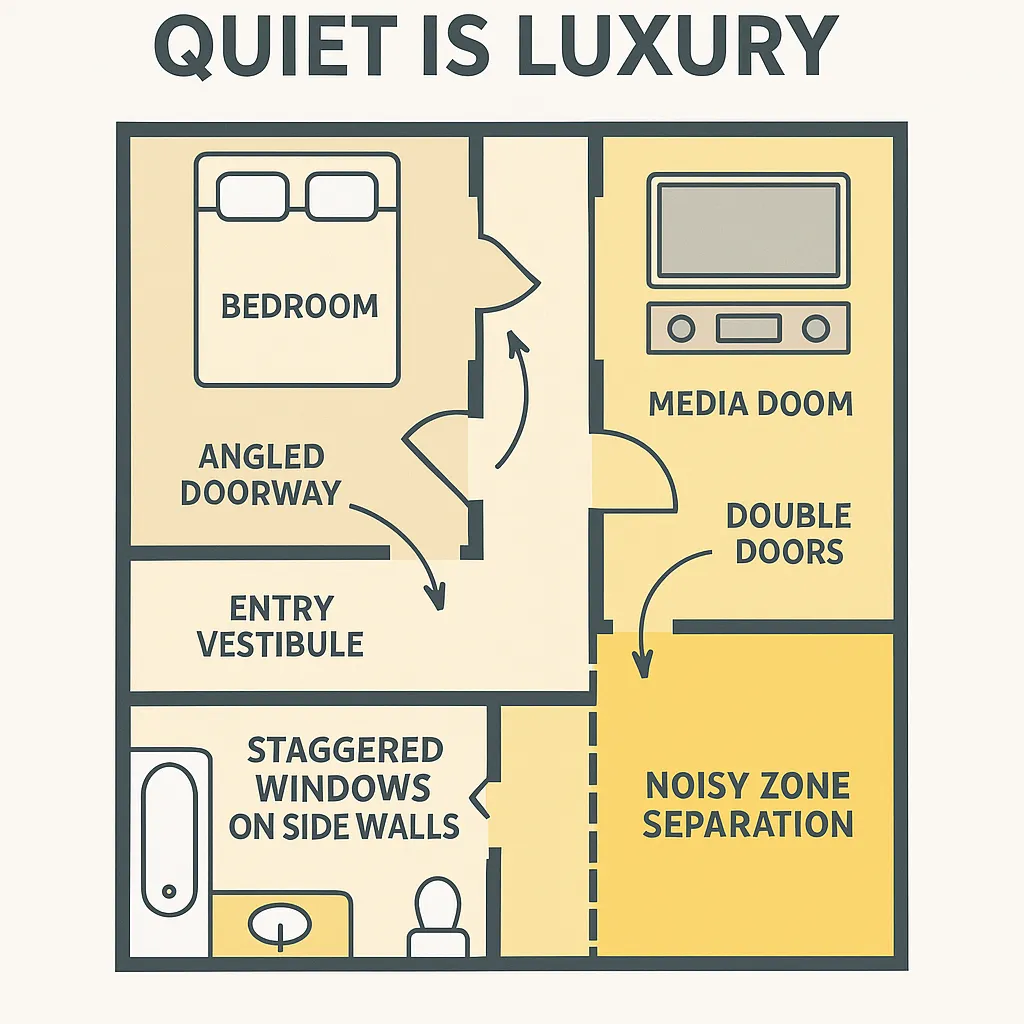
Design for Privacy & Quiet
True comfort isn’t just what you see—it’s what you don’t hear.
Smart privacy design gives every family member space to relax, reset, and recharge without echoes or awkward sightlines.
- 🚪 Add short vestibules or angled entries so bedrooms don’t open straight into hallways.
- 🔇 Use double doors or solid-core slabs for media rooms and offices.
- 🧱 Separate noisy zones (laundry, kitchen, garage) from sleeping areas when possible.
- 🪟 Stagger windows on side walls for visual privacy between neighboring homes.
- 📐 Position bathrooms carefully—avoid shared walls between primary and secondary suites.
Tip: soundproof where it matters most—bedrooms, offices, and playrooms.
Acoustical caulk and insulation are small costs with huge everyday impact.
🤫 Quiet is luxury—and it costs less than you think to design for it.
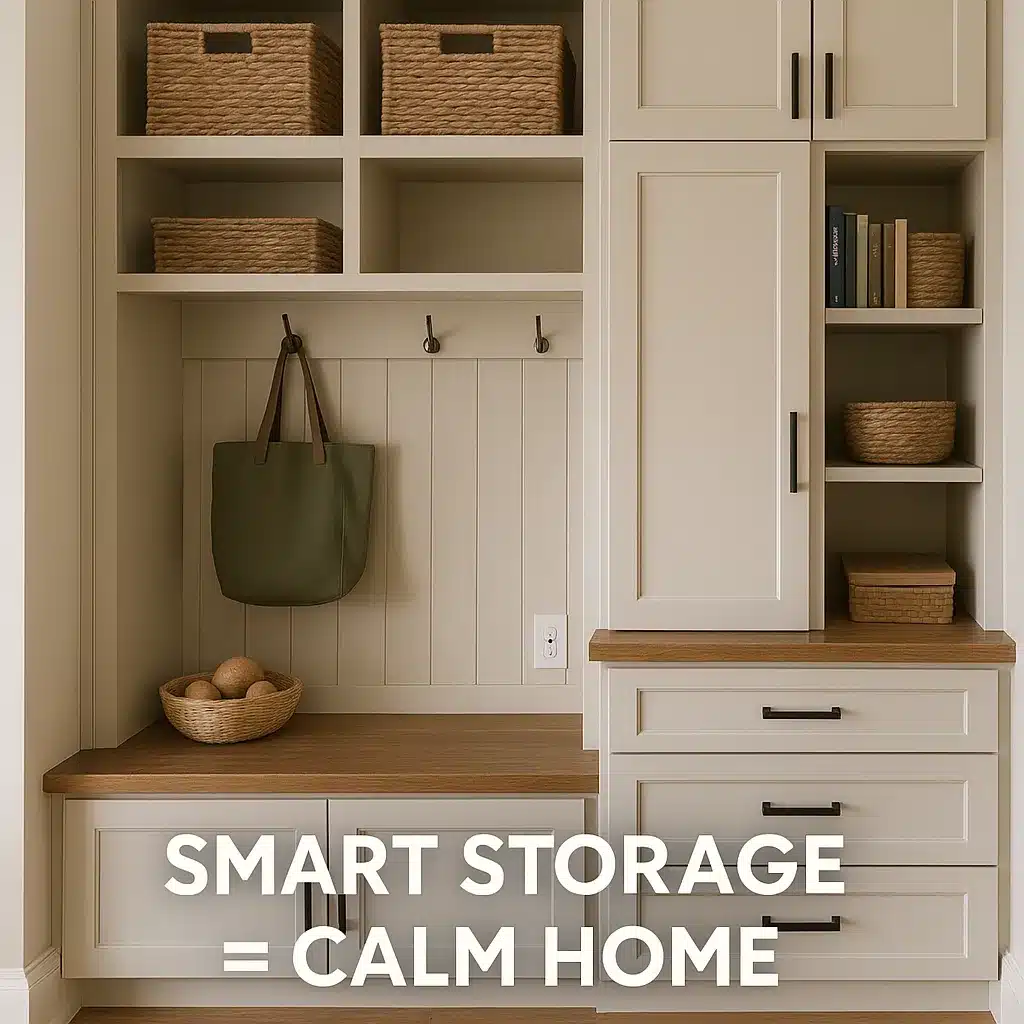
Design for Storage That Works
Every family collects gear—so plan storage with purpose.
Built-ins, wall systems, and hidden nooks create calm, clutter-free living spaces without adding square footage.
- 🧺 Give every floor a dedicated storage wall—linen, pantry, or gear zone.
- 🧱 Add cubbies and tall cabinets to dead-end walls or under stairs.
- 🪞 Combine open and closed shelving for balance between display and concealment.
- 🐶 Include pet storage near entry or laundry areas for convenience.
- 🔌 Plan outlets inside closets and drawers for hidden charging stations.
Storage doesn’t need to shout—when done right, it simply keeps life running smoother.
Every cabinet, shelf, and bin earns its place in a well-designed home.
📦 Smart storage equals calm mornings and cleaner spaces.
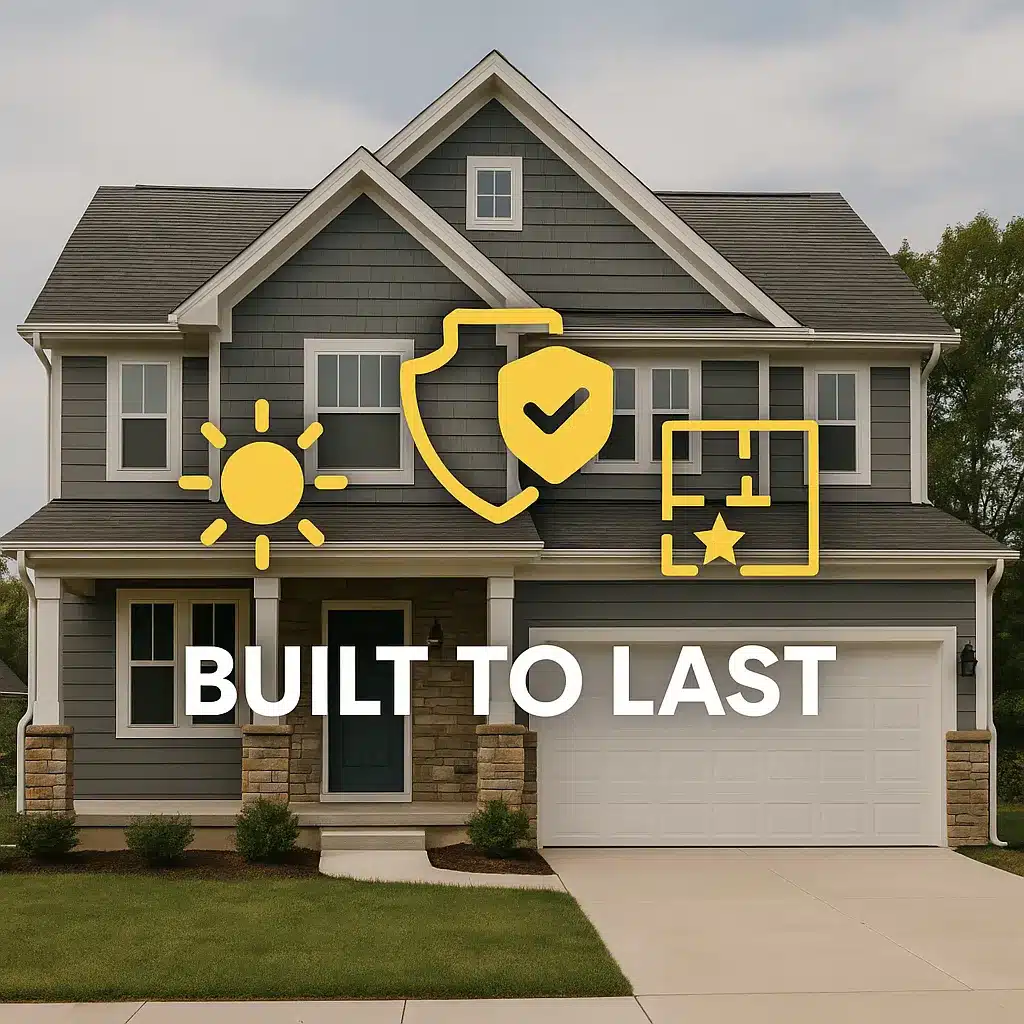
Design for Resale & Longevity
Trends fade, but good bones stay valuable.
Floor plans that balance flexibility and classic proportions stand the test of time—and attract future buyers who want the same comfort and flow your family enjoys today.
- 🏡 Choose timeless exterior styles—modern farmhouse, craftsman, or transitional—over fleeting trends.
- 🪟 Invest in window placement and light balance rather than ornate trim or finishes.
- 🛋 Keep flex spaces convertible: office, guest, or playroom all in one footprint.
- 🚪 Simplify structure—fewer rooflines and cleaner framing improve resale and reduce future repairs.
- 🔧 Prioritize durable materials: flooring, cladding, and fixtures that age gracefully.
Homes with flexibility, light, and efficient flow hold value through market shifts.
A beautiful plan today should still feel fresh ten years from now.
💡 Build for tomorrow while living comfortably today.

Design for Region & Climate
The best homes fit their landscape.
A smart plan responds to weather, sun, and materials that perform well in your region.
Local styles often evolved for a reason—respect those lessons while adding modern efficiency.
- 🌤️ Orient living spaces toward solar gain in cool climates; shade south windows in warm zones.
- 🏠 Use regionally proven cladding and roofing—metal, stucco, brick, or fiber cement where appropriate.
- 💨 Plan overhangs, vents, and window placement to promote natural ventilation.
- 🌧️ Include entry shelters and durable finishes that can handle local weather patterns.
- 🌲 Choose materials that are locally sourced to save on shipping and blend with the landscape.
Building regionally smart isn’t just sustainable—it’s cost-smart and comfort-smart.
A home that belongs where it stands always performs better.
🌎 Design with climate, not against it.
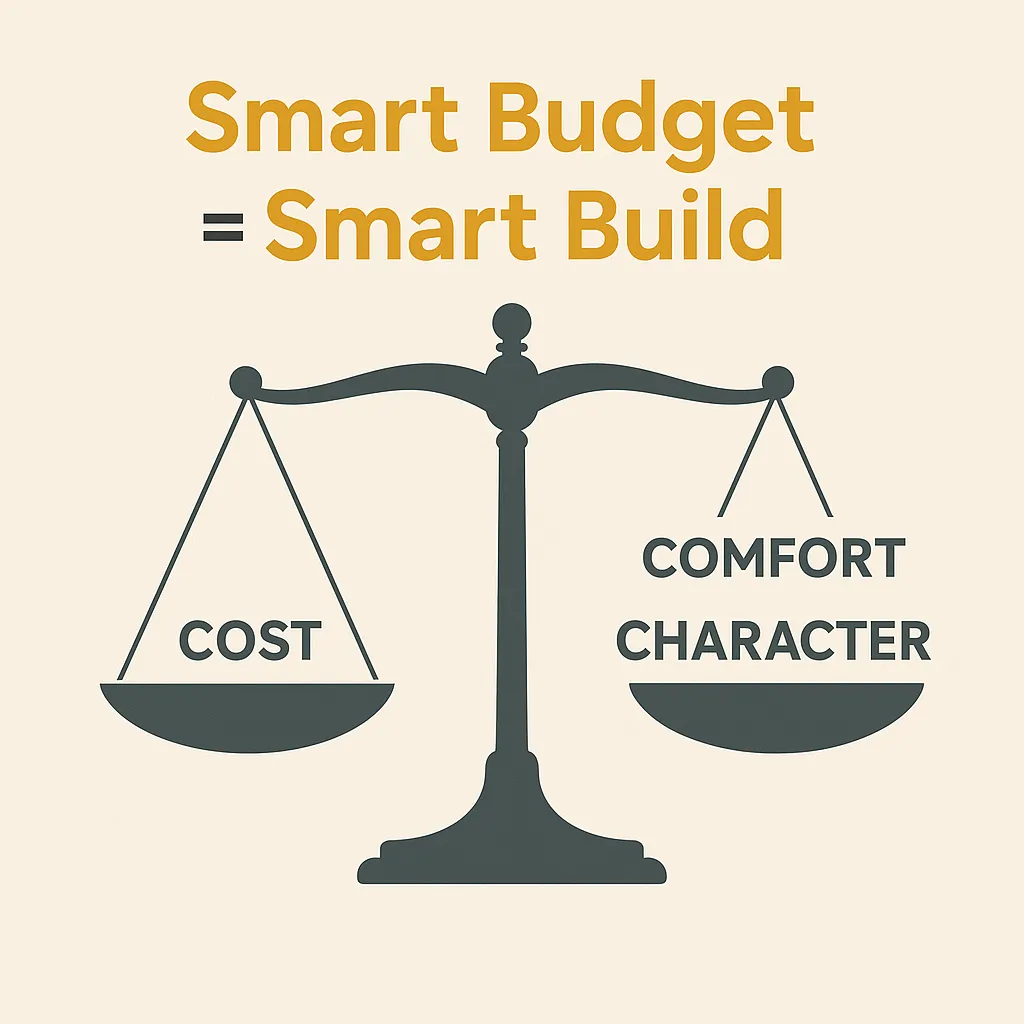
Design for Budget Control
The fastest way to overspend is to lose sight of the big picture.
Smart design and disciplined choices help your home stay on budget—without feeling like a compromise.
- 📏 Keep a 10–15% contingency untapped until framing is complete.
- 🪟 Simplify rooflines and window groupings—they drive more cost than finishes.
- 🧱 Choose one or two materials used consistently for a cohesive, affordable look.
- ⚙️ Decide on appliances early so cabinetry, plumbing, and power stay aligned.
- 🧾 Track allowances weekly—small overruns add up fast.
Every smart plan balances cost, comfort, and character.
Aim for clean structure and solid bones first—style comes after function.
💰 Spend where it shows—save where it doesn’t.
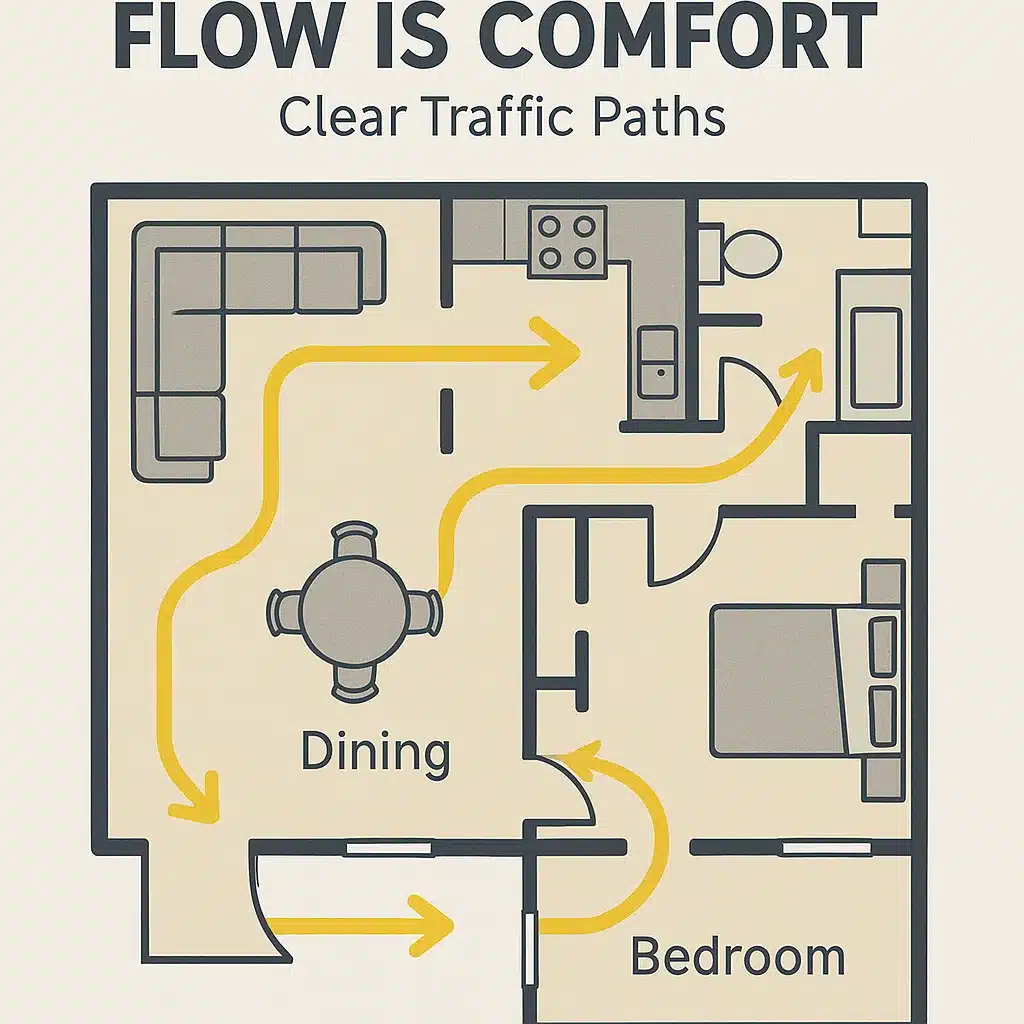
Design for Everyday Flow
The best homes make daily life easier, not busier.
Before you fall in love with a floor plan, walk it in your mind—from the garage to the kitchen, laundry, and bedrooms.
Smooth traffic paths are what make a home feel effortless.
- 🚶♀️ Map your daily routes—avoid pinch points between kitchen, laundry, and entry zones.
- 🧺 Keep laundry near bedrooms or mudroom for fewer steps and faster chores.
- 🚪 Add pocket doors to high-traffic areas to improve movement and privacy.
- 🍽 Align the kitchen, dining, and outdoor space for easy entertaining.
- 💡 Confirm furniture clearances with actual measurements—not just square footage.
When in doubt, trace one weekday and one weekend on your plan.
You’ll quickly see where flow improves comfort—and where small tweaks make a big difference.
🏠 Flow is comfort—because every good plan fits how you actually live.

Final Takeaway: Design for Life
Great homes don’t just look good on paper—they live well in real life.
The features that matter most aren’t trends—they’re time-tested comforts that help families thrive, day after day.
- 🏡 Start with structure—form, flow, and light come first.
- 💡 Let your daily patterns shape design, not the other way around.
- 🛠 Partner with a builder who values function before flash.
- 📋 Keep checklists and visuals aligned to avoid mid-build surprises.
- 🔑 Remember: comfort is the goal, not complexity.
The most successful builds happen when design, budget, and lifestyle align.
That’s the secret to a home that feels easy to live in and proud to own.
✨ Design for life—because beautiful homes start with thoughtful planning.